This collection is designed for those seeking narratives that unite and connect us, in times where everything seems designed to pull us apart.
Start getting inspired by discovering this series of content:
Explore how the narrative of interconnectedness can be a powerful response to authoritarianism.
Learn to narrate from the “larger we” and not from fragmentation.
Get inspired by reflections, interviews, and resources to build narratives about the power of connections.
Explore at your own pace
How much time do you have today to explore this collection?
If you have 10 minutes: A spark of inspiration
We have a proposal:
Let’s use interconnectedness as a narrative antidote to authoritarianism.
But, what does this mean?
In the face of the dominant narratives that glorify individualism, fragment bonds and normalize fear, we want to positioning another story: one that reminds us that we are sustained by a network of relationships, care and shared knowledge.
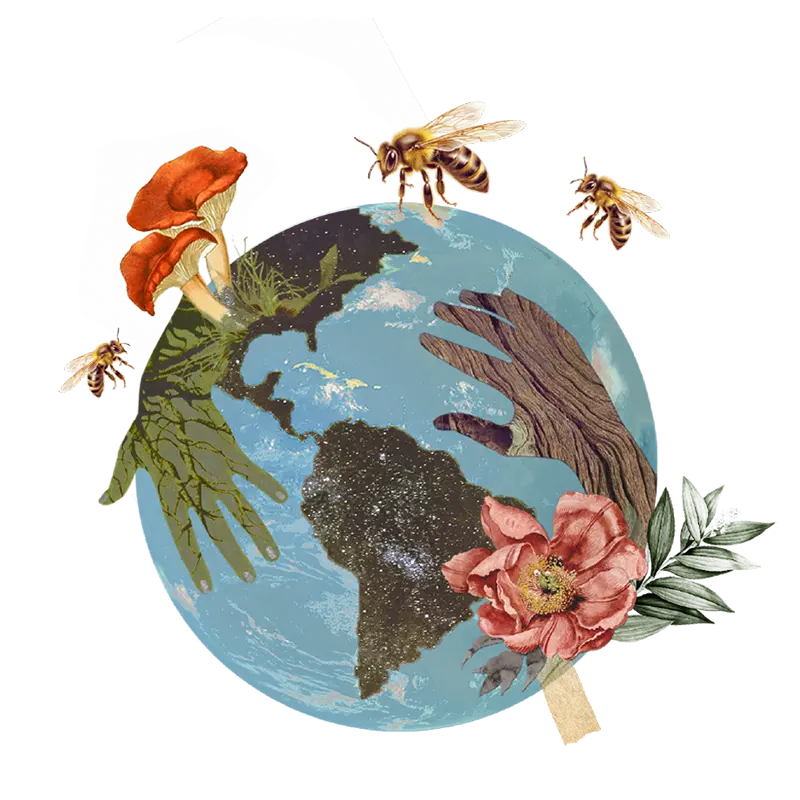
This narrative is not only told, it is practiced. It invites us to recognize ourselves as part of a broader “we” that is built by weaving connections between movements, knowledge, territories and new audiences.
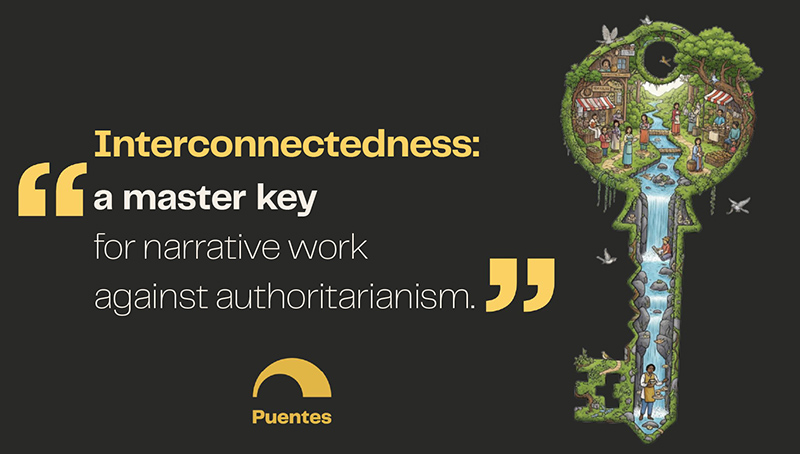
We are committed to making the interconnection a master key that opens doors to create community, connect our causes, activate our collective imagination and make sense of the future we seek to build.
“In the face of authoritarianism, true emancipation emerges from recognizing that we are nodes in a web of life. As feminist theologian Ivone Gebara wrote, ‘Nothing is saved alone; everything is saved in community.’
Building radical interconnections—across streets, bodies, and land—is the antidote.”
Written and performed by our Program Director, Camila Rodas, and produced by Ricardo Osorno.
This is an example of how interconnectedness can help us shape a new narrative for democracy.
You can use this piece as inspiration in gatherings, to open workshops, or during moments of reflection or closing.
If you have between 20 and 30 minutes: A moment to spark ideas
Key points to keep weaving:
Fascism and isolation vs. democracy and interconnectedness
The narrative of individualism has weakened our bonds, eroded the community fabric that makes democracy possible, and paved the way for authoritarianism.
In this context, at Puentes we champion the narrative of interconnectedness: a story that recognizes that no one thrives alone, that well-being is relational, and that only in community can we face today’s challenges.
This narrative is not only told—it is practiced. It is an invitation to reorganize our movements and our communications from the understanding that the future is woven collectively.
Interconnectedness as a master key for narrative work
Using interconnectedness as a narrative thread is like sharing a master key that opens multiple doors: to empathy, to a sense of belonging, to connection with others, to mutual care, and to new ways of imagining democracy, borders, and our relationship with the planet.
This narrative allows us to open cracks through which light can enter in this moment of uncertainty and transformation.
At Puentes, we understand the potential of the narrative of interconnectedness across three dimensions:
Emotional
It reminds us that every person is part of something larger, such as a community, an ecosystem, or the vast web of life.
Political
It allows us to reinterpret the major crises of our time and propose pathways for transformation that advance multiple agendas at once.
Strategic
Using this concept helps us communicate transformative values, such as justice and care, without using restricted or censored terms.
From interconnectedness to the “Larger We”:
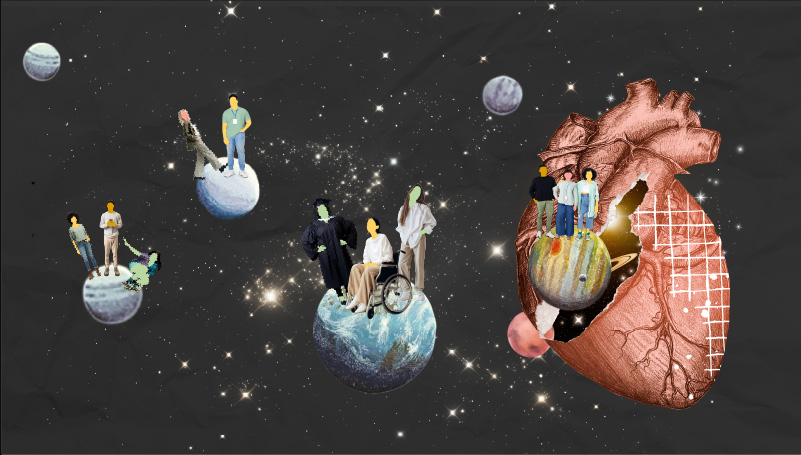
We need to build and communicate a “larger us”: a narrative that doesn’t reduce conflict to a battle between good and evil, but instead expands the boundaries of empathy, recognizes human complexity, and allows us to imagine shared futures grounded in interconnectedness and mutual care.
How should we do it?
Discover and expose the values that connect us.
Tell stories of connection where we once only saw difference.
Build meaning from shared aspirations, not just from what we denounce.
It is a practice that begins in the way we understand our own stories: no person, organization, or cause exists in isolation.
Echoes of Interconnectedness
Colombian political scientist, pioneer in digital ecosystem research in the region, and creator of “La Lupa Digital: Gender Justice,” our digital listening lab.
Cristina reminds us that democracy lives in the everyday conversations we have in community, and that democratic power is built in the collective, the plural, and the diverse.
“Democracy is a form of expanded interconnectedness.” -Cristina Vélez
Passionate about strategic and intersectional communication. She is the co-director of Intrasentido, a feminist organization based in Guadalajara.
We talked to her about how we can communicate interconnectedness from within our movements and what narrative strategies we can use to expand the “we.”
“Interconnectedness is a notion that we cannot exist without the other (otre). From that, we can combat the ‘us versus them’ logic.” -Paloma Martínez
In this virtual event, 90 activists from Latin America discovered that interconnectedness is a master key that opens doors to encounter, political imagination, and mutual care.
Watch the full session video here to find inspiration and continue building new possible futures collectively.
Fabriders Practical resources to build trust, address risk in digital environments, and adapt formats to different types of participation. Especially useful for distributed facilitation. On their website you will find resources of interest.
If you have more than 30 minutes: A journey to the heart of narrative work
Lighthouses of Interconnectedness
Go deep into this collection guided by our Director Mónica Roa.
From Interconnectedness to the “Larger We”: expanding the circles of identity, care, and solidarity
Let’s explore how to build narratives that recognize human complexity and weave bonds beyond the boundaries of conflict.
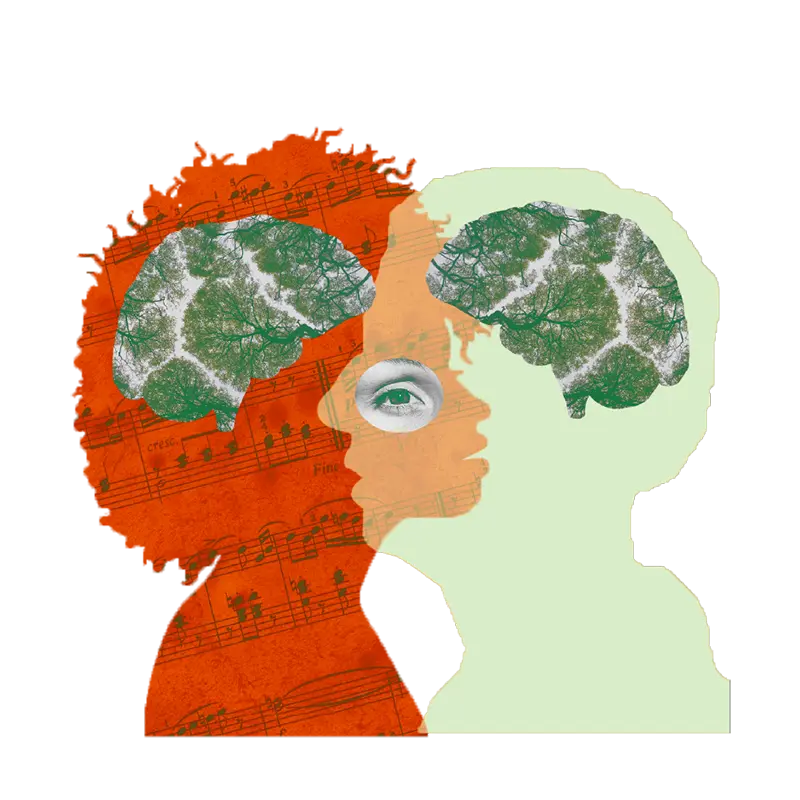
Let’s discover what neuroscience tells us about how stories forge our connection with people, expand our circle of belonging, and transform attitudes and perceptions in lasting ways.
To learn more about the effects of stories and communication on the brain, we suggest reading Thomas Coombes' Hope-based Communications manual (pages 70 and 73).
Interconnectedness: a master key for narrative work against authoritarianism
Interconnectedness as an articulating narrative is capable of opening doors to empathy, belonging, and new ways of imagining the world we inhabit. From an emotional, political, and strategic standpoint, it allows us to resist in community and open cracks through which light enters in this historical moment of uncertainty and transformation.
Fascism and isolation vs. democracy and interconnectedness: The narrative antidote to authoritarianism
Faced with the advance of authoritarianism, we need narratives that repair our bonds and strengthen the collective fabric. Explore how interconnectedness can become a strategic compass for our movements and communications.
Because the future is not faced in isolation: it is woven in community.
an expert in research for cultural change, building shared understandings within the Puentes team about what we mean by interconnectedness, the context in which we are situated, and what we consider to be the scope and transformative potential of our work.
As she says herself, this is a “...dance with words, metaphors, and even narratives… that will allow us to have a shared perspective, and clarity to make decisions, so we can dance to the same beat.”
Colombian political scientist, pioneer in digital ecosystem research in the region, and creator of “La Lupa Digital: Gender Justice,” our digital listening lab.
Cristina reminds us that democracy lives in the everyday conversations we have in community, and that democratic power is built in the collective, the plural, and the diverse.
“Democracy is a form of expanded interconnectedness.” -Cristina Vélez
Passionate about strategic and intersectional communication. She is the co-director of Intrasentido, a feminist organization based in Guadalajara.
We talked to her about how we can communicate interconnectedness from within our movements and what narrative strategies we can use to expand the “we.”
“Interconnectedness is a notion that we cannot exist without the other (otre). From that, we can combat the ‘us versus them’ logic.” -Paloma Martínez
In this virtual event, 90 activists from Latin America discovered that interconnectedness is a master key that opens doors to encounter, political imagination, and mutual care.
Watch the full session video here to find inspiration and continue building new possible futures collectively.
We want our collective gatherings to be more than events. We want them to become a standing invitation to move through the world like mycelium moves through forests: threading life along invisible bonds, certain of their hold.
2.
To reach that level of interconnectedness, we must link our causes in a deeper way, expanding the idea of the ‘we’ as a strategy. We need to trace more points of encounter, to seek each other in our pains, aspirations, and common values. But it is not enough just to get together. We must create gatherings with intention and care.
Event Memories: A gift for you
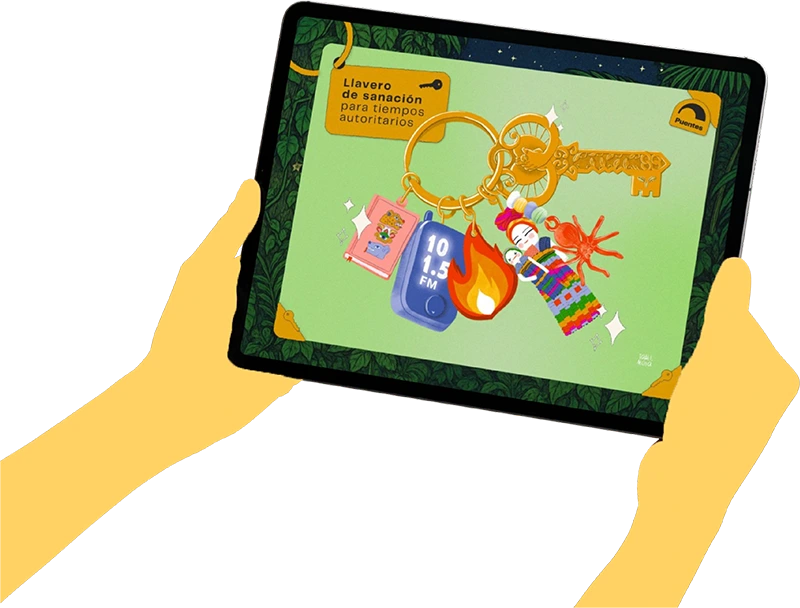
With a heart full of activist inspiration from our gathering, we created the “Healing Keychain for authoritarian times” which you can access now and which includes:
Practical and theoretical tools to design spaces of encounter.
The printable version of the illustration created live by the artist Tati Mesa during our gathering.
Five different stories about democracy, social media, decolonization, mutual care, and conservation, in the key of interconnectedness (available in text and video).
And other materials that we used during the meeting.
The recordings of everything that happened during the session and the presentation.
A beautiful prayer of interconnectedness created by Camila Rodas, our Program Director.